SYMMETRY ACCESS1
Symmetry Access Control
Symmetry provides door and cardholder administration, access rules, alarm monitoring, and reporting. System capabilities depend on the edition, controllers, and selected modules.

AMAG Symmetry access control installation, upgrades, and service from SSP.
SSP installs and supports AMAG Symmetry access control for commercial buildings, campuses, and secured facilities across Georgia. We help teams manage doors, badges, alarms, and access permissions using systems designed for their site.

SSP works with AMAG Technology systems, from door controllers and card readers to Symmetry software, video integration, credential administration, and service. We inspect the existing hardware and how staff use the system before planning an installation or upgrade.
For an existing Symmetry system, we can review controllers, readers, software versions, access groups, and the status of connected doors. Any expansion plan should account for hardware compatibility and the operational needs of each location.
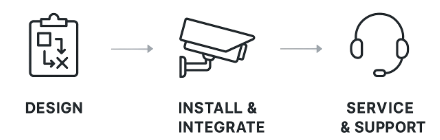
Plan the right system around your facility, risks, and workflows.
Deploy hardware and software with professional installation.
Connect video, access control, analytics, and operational workflows.
Support, troubleshoot, upgrade, and expand the system over its lifecycle.
AMAG Symmetry supports access control, alarm management, and compatible security integrations. Other AMAG products include Symmetry CONNECT for identity management, Symmetry GUEST for visitors, and CompleteView for video.
Symmetry provides door and cardholder administration, access rules, alarm monitoring, and reporting. System capabilities depend on the edition, controllers, and selected modules.
CONNECT helps organizations coordinate physical identities and access permissions, while GUEST supports visitor workflows. SSP can assess how these tools relate to the customer's current access control environment.
Manage door schedules, access rights, and alarms using compatible AMAG controllers and Symmetry software.
Issue and manage staff or contractor credentials with permissions that reflect each person's role and location.
Coordinate door alarms and events with supported video systems, including compatible Symmetry CompleteView configurations.
Review existing controllers, readers, wiring, and server infrastructure before deciding what can be retained or upgraded.
Support access policies for campuses and multiple sites without losing control over local access requirements.
Help maintain controllers, readers, software, permissions, and connected devices as needs change.
A manufacturing plant, healthcare facility, and office campus may have very different access schedules and security requirements. SSP plans Symmetry around the doors, users, and operating procedures at each location.
Check current doors, controllers, readers, credential types, access schedules, and known issues.
Choose a compatible Symmetry edition, controller configuration, access groups, and required integrations.
Install approved door hardware and controllers, configure the software, and connect supported devices.
Test doors, badges, schedules, and alarms, then document the system and train administrators.
Support troubleshooting, added doors, credential changes, upgrades, and future expansion.
SSP installs, configures, and supports AMAG Symmetry systems for commercial facilities in Georgia. We assess the existing doors, controllers, credentials, and administrative needs before planning the work.
Symmetry supports compatible security integrations, including video. We review the available software, licenses, and equipment before recommending an integration.
Symmetry CONNECT focuses on physical identity and access administration across systems. Symmetry GUEST supports visitor registration and management. They address different operational needs.
Yes. We can review controllers, card readers, software versions, credentials, and connected equipment to plan service, upgrades, or additional doors.
Symmetry offers options for larger and multi-site environments. The appropriate edition and architecture depend on the organization, access requirements, and existing infrastructure.