
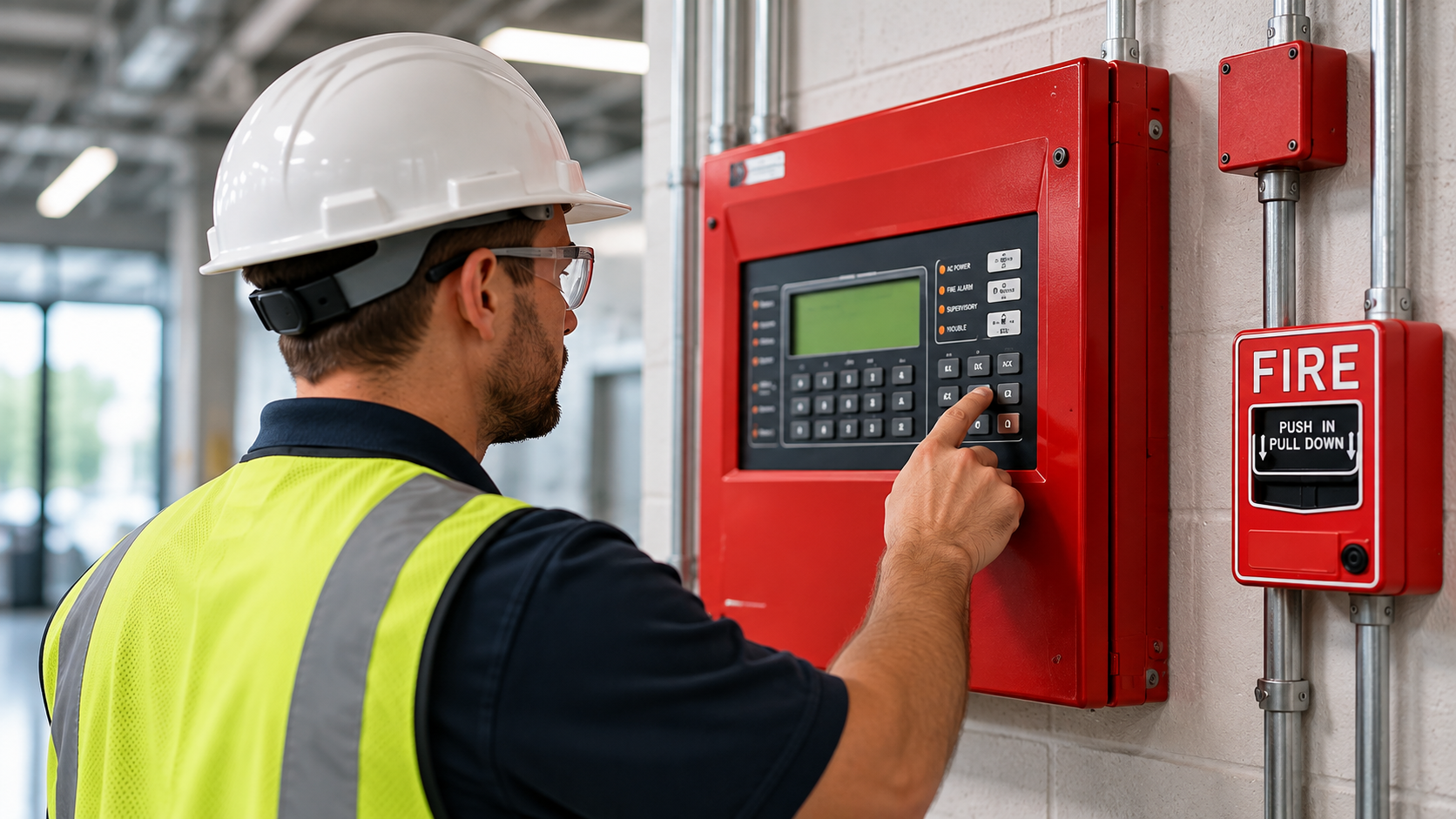
Most businesses know they need to have their fire alarm system inspected regularly. But there's something many building owners and facility managers may not realize: having an annual inspection doesn't necessarily mean every required check has been completed.
Different parts of your fire alarm system need different types of attention. Some are checked for damage, others are tested to make sure they work, and smoke detectors may need additional testing to confirm they're detecting smoke properly.
These requirements are outlined in NFPA 72, the national standard for fire alarm systems.
Here's what that means for your building.
1. Visual Inspections: Making Sure Everything Looks Right
The first type of inspection is straightforward. A technician looks over your fire alarm equipment to make sure nothing is damaged, blocked, missing, or out of place.
For example, a smoke detector might be covered in dust, or a manual fire alarm pull station might be blocked by furniture.
Even if the equipment is working, these conditions could affect how well your system performs during an emergency.
Some components need visual inspections more than once a year, so it's important to make sure your inspection schedule accounts for them.
2. Functional Testing: Making Sure Everything Actually Works
Just because a fire alarm device looks fine doesn't mean it's working correctly.
That's why technicians also perform functional tests.
These tests check whether the equipment responds the way it's supposed to. Depending on the device, a technician might:
- Test a smoke detector to confirm it responds to smoke.
- Activate a manual pull station to check that the system receives the signal.
- Test alarm horns and strobes to make sure people can hear and see the warning.
- Check the backup power system to make sure it can support the alarm system if normal power is lost.
Different devices have different testing requirements. Your inspection provider should know which tests are needed and how often they must be completed.
3. Smoke Detector Sensitivity: Making Sure Detectors Respond at the Right Time
This is one of the less obvious parts of fire alarm maintenance.
A smoke detector can still activate during a test but have trouble detecting smoke at the correct level.
Over time, dust, dirt, and aging can affect how sensitive a detector is.
If it's too sensitive, it may cause unnecessary alarms. If it's not sensitive enough, it could take longer to detect a fire.
That's why NFPA 72 includes additional sensitivity testing requirements for applicable smoke detectors.
These checks generally begin within the first year after installation and continue on a schedule determined by the code and the detector's testing history.
Your fire alarm service provider can help determine when your detectors are due for this testing.
Why Your Fire Alarm Inspection Reports Matter
Getting your system inspected is important, but keeping the records is important too.
Your inspection reports help show what was tested, whether the equipment passed, and if anything needs to be repaired.
For example, if a technician finds a faulty smoke detector, that issue should be documented so your team knows it needs attention.
These reports can also be requested during fire safety inspections, insurance reviews, or other compliance checks.
Keeping them organized makes it easier to track repairs and know when your next inspection is due.
What Does This Mean for Businesses in Georgia?
Georgia uses the 2022 edition of NFPA 72, with state-specific changes, as part of its fire safety requirements.
However, the exact inspections and tests your building needs can depend on several factors, including the type of building, the equipment installed, and local fire safety requirements.
A school, hospital, warehouse, and office building may have different considerations.
The easiest way to stay on top of these requirements is to work with a qualified fire alarm service provider who understands your system and the regulations that apply to your facility.
Three Questions Worth Asking Your Fire Alarm Company
You don't need to memorize fire codes to understand whether your building is receiving the right service.
The next time you speak with your fire alarm provider, ask:
1. Are we completing every inspection and test our building requires?
Your provider should be able to explain what's included in your regular visits and whether anything needs to be scheduled separately.
2. Is there anything in our system that needs attention?
Ask about equipment that failed testing, recurring problems, or repairs that haven't been completed.
3. When is our next required inspection or test?
A good inspection program should make it easy to know what's coming up, rather than leaving you to figure it out yourself.
Need Help With Your Fire Alarm Inspections?
Fire alarm inspections shouldn't leave you guessing about whether your building is properly protected.
At Southeastern Security Professionals (SSP), we help businesses and organizations throughout Georgia inspect, test, and maintain their fire alarm systems.
Whether you need to schedule an inspection, address an existing issue, or better understand your current inspection program, our team can help.
Contact SSP's team or call 888-540-0175 to discuss your facility's needs.